Table of Contents
Payroll settings overview - Reckon One
Overview
Before you start using Reckon One payroll, we recommend you go to the Payroll settings section to set your book up.
Go to Payroll, then Payroll settings.
General settings
Pay run preferences
Pay run preferences control how certain elements behave when you create a new pay run. Once set, these preferences apply by default to future pay runs, although you can still make changes within individual pay runs if needed. Setting up pay run preferences is especially useful if your payroll process follows the same rules each pay period, as it can save time and reduce the risk of errors. You can choose:
- which pay items are added by default when you create a new pay run
- whether ordinary earnings hours are automatically reduced when leave is entered in a pay run
Learn how to set pay run preferences.
Payment defaults
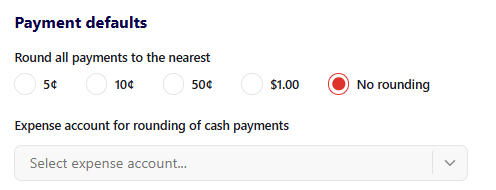
If you want to round net pays, select a rounding amount for cash payments to employees and select the expense account for the allocation of the rounding amount.
Account defaults
Set default ledger accounts for payroll, so your payroll activities track back to the correct ledger accounts for accurate record-keeping. Learn how to set default ledger accounts for payroll.
Company details
You will find your business details here based on the ABN and branch number that you entered when subscribing to Reckon One.
Please note that you cannot change the ABN and branch details. However, you can change other details, for example:
- Company name
- Legal name
- If you're registered employer of Working Holiday Makers
- Contact details (name, email address, contact number and address)
Bank accounts
Manage your bank accounts so you can use them in your pay runs and generate ABA files to pay your employees.

Email verification
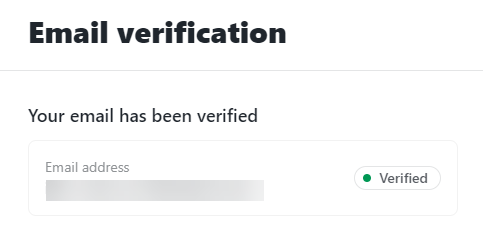
To be able to continue accessing Reckon One, you will need to verify the email address that was used to sign up.
Superannuation funds
You will need to configure Super funds to be able to assign a fund product to employees to meet your superannuation obligations.
Payments
Default bank accounts
You can set default bank accounts for to ensure wages, superannuation, and other payroll payments are allocated to the correct account. Learn how to set default bank accounts.
Automatic payments
Learn how to automatically record wages in Reckon One when you mark a pay run as paid. When you mark a pay run as paid, a payment transaction will be created with the net pay value for each employee, and you'll have the option to create ABA files (batch payments) directly from within your pay runs. Learn how to set up automatic payments.
Suppliers
Manage suppliers that you link to pay items (e.g. union fees) to track the amounts you need to pay.
Create new supplier
- Click on Create supplier.
- Enter all the supplier's name and bank details (optional).
- Click Create.
Edit a supplier
- Go to Payroll, Payroll settings, then Suppliers.
- Find the supplier and click on the pencil icon to Edit️.
- Make changes as required.
- Click Save and close.

Delete a supplier
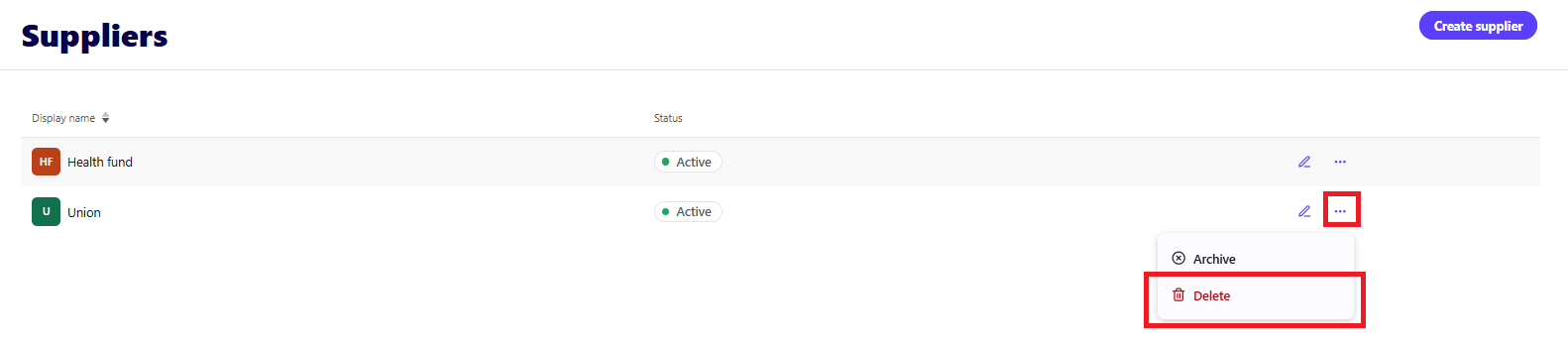
- From the Supplier's list, click on the ellipsis menu (3 dots), then select Delete.
- Click Yes, delete on the confirmation message.
Pay schedules
Pay schedules allow you to streamline the pay run process. You can create pay runs more efficiently and reduce any potential mistakes with selecting dates or employees.
Pay items
Pay items help categorise and customise the way you pay employees. Note that an item cannot be disabled or marked inactive when it has been used in a draft pay run or assigned to an employee.
Pay items include:
- Earnings
- Ordinary time earnings (OTE): Amounts paid to employees for their ordinary hours of work that are used to calculate the employer's super guarantee contribution.
- Overtime: Amounts paid to employees for hours worked over and above their ordinary hours of work.
- Bonuses and commissions: Amounts paid to employees for incentive-based activities that are generally in addition to their salary or wages.
- Directors' fees: Compensation paid for services performed as a company director.
- Variable: Amounts that are not OTE or overtime but included in gross earnings.
- Termination: Payments made as a result of a termination of employment.
- Allowances
- Cents per KM
- Award Transport Payments
- Laundry
- Overtime Meal Allowance
- Travel and Overseas Accommodation
- Tool Allowance
- Tasks
- Qualifications/Certificates
- Other
- General
- Home office
- Non-deductible
- Transport or fares
- Private vehicle
- Uniform
- Deductions
- Other
- Union/Professional Association Fees
- Workplace Giving
- Reimbursement
- Superannuation
- Super Guarantee
- Employer Additional
- Productivity
- Collective Agreement
- Salary Sacrifice
- Member voluntary
- Spouse deduction
- Leave
- Annual leave
- Personal leave
- Long service leave
- Other
- Paid Parental Leave
- Worker's Compensation
- Ancillary and Defence leave
- Time off in lieu
- Other
- Company contribution
Create pay item
- Go to Payroll, Payroll settings, then Pay items.
- Click Create pay item > select the type of pay item.
- Enter the details (type, account and other required details).
- Click Create.
Edit a pay item
- Go to Payroll, Payroll settings, then Pay items.
- Click on the relevant pay item type tab (Earnings, Allowance etc.)
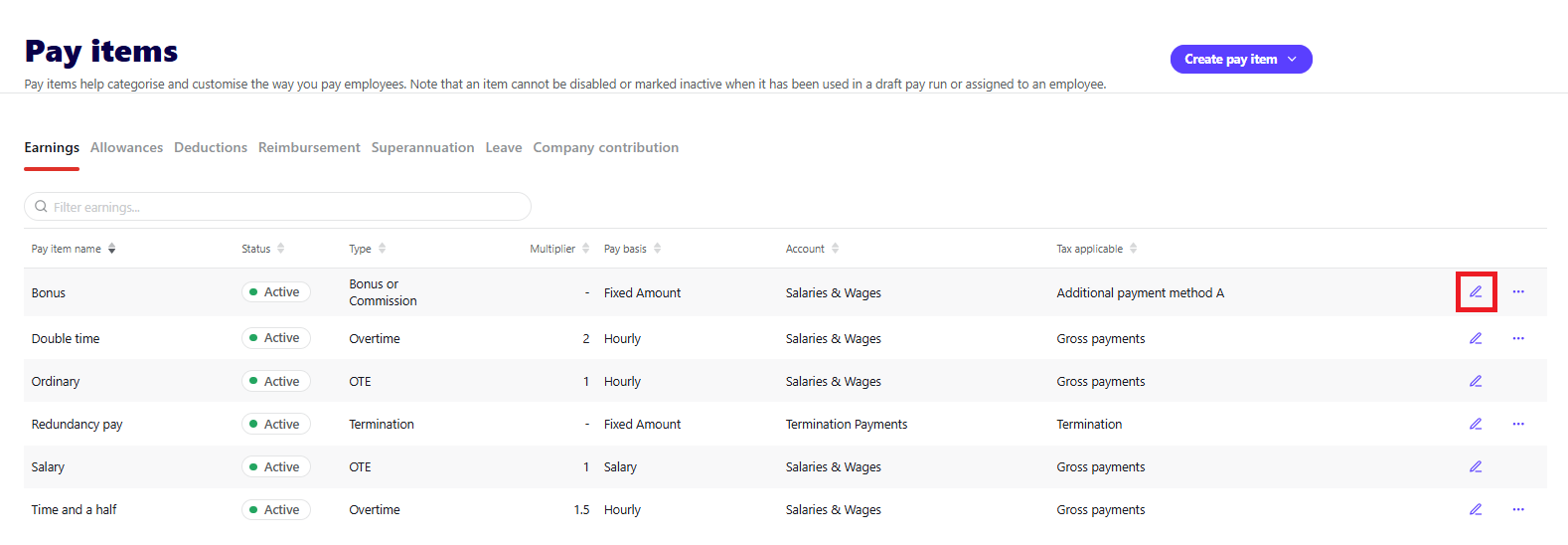
- Find the pay item and click on the pencil icon to Edit.️
- Enter the details
- Click Save and close
Delete a pay item
- Go to Payroll, Payroll settings, then Pay items.
- Click on the relevant pay item type tab (Earnings, Allowance etc.).
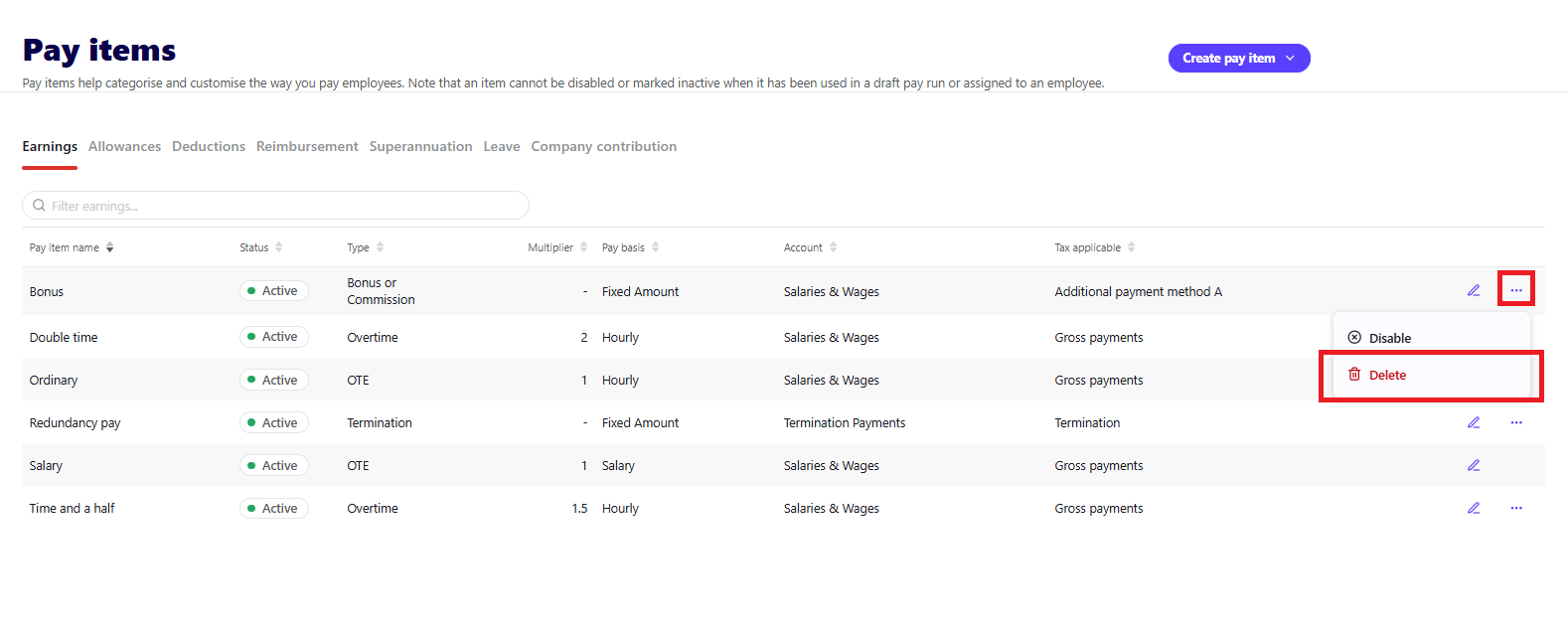
- Find the pay item and click on the Ellipsis button ... > select Delete.
- Click Yes, delete to the confirmation message.
Archive/Disable a pay item
- Go to Payroll, Payroll settings, then Pay items.
- Click on the relevant pay item type tab (Earnings, Allowance etc.).
- Find the pay item and click on the Ellipsis button ... > select Disable.
- Click Yes, disable to the confirmation message.
Reckon Mate invitations
You can invite your employees to use Reckon Mate, our free app that allows your employees to view their payslips, leave balances and pay summary.
Learn how to invite your employees to Reckon Mate.
Software ID
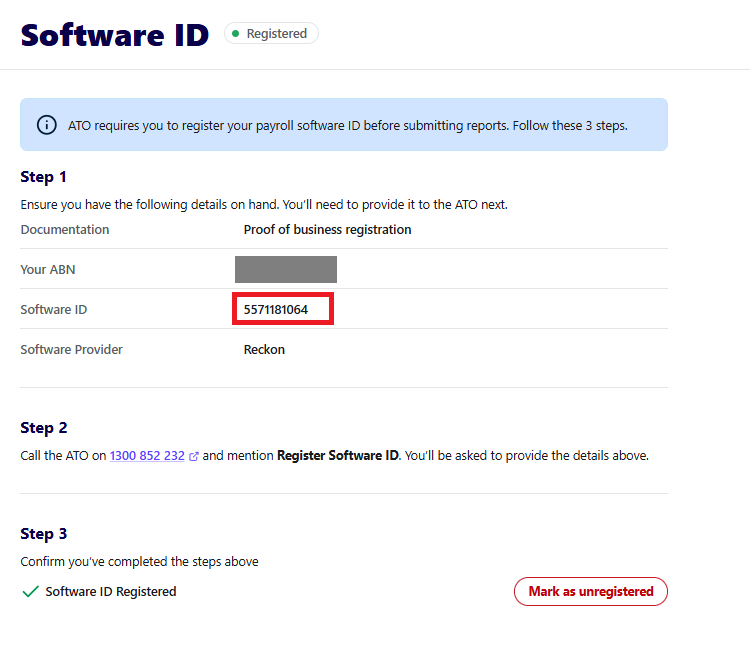
The ATO requires you to register your payroll software ID before submitting STP reports.
This section provides you with the steps you need to follow to register the Software ID with the ATO.
Single Touch Payroll
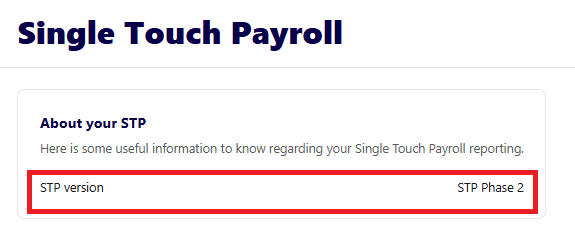
Check to see if you are using STP Phase 1 or STP Phase 2.
If you are still on STP Phase 1, you'll get the link to an easy-to-follow STP 2 Ready Checklist to switch.
Help and support
In this section, you will find useful links to:
- Our help site.
- Reckon Community.
- YouTube how-to playlist.
- Lodge a support ticket/contact details.
- Submit product suggestions and vote on ideas submitted by other users.
- Live chat.
Need more help?
Ask the Reckon Community at: https://community.reckon.com/categories/reckonone
Or log a Support Ticket: https://www.reckon.com/au/support/