Paid bill or invoice is listed as past due on the ageing reports
Legacy KB ID: 1197
Question
Why is a paid bill or invoice listed as past due on the ageing reports?
There are several reasons why a bill or invoice displays on an ageing report when you think it should not:
- Incorrect report ageing preference
- Incorrect terms specified on the bill or invoice
- Term set up incorrectly
- Incorrect system date
Answer
Check the following to determine if the transaction should be on the ageing report:
- Check the ageing preferences:
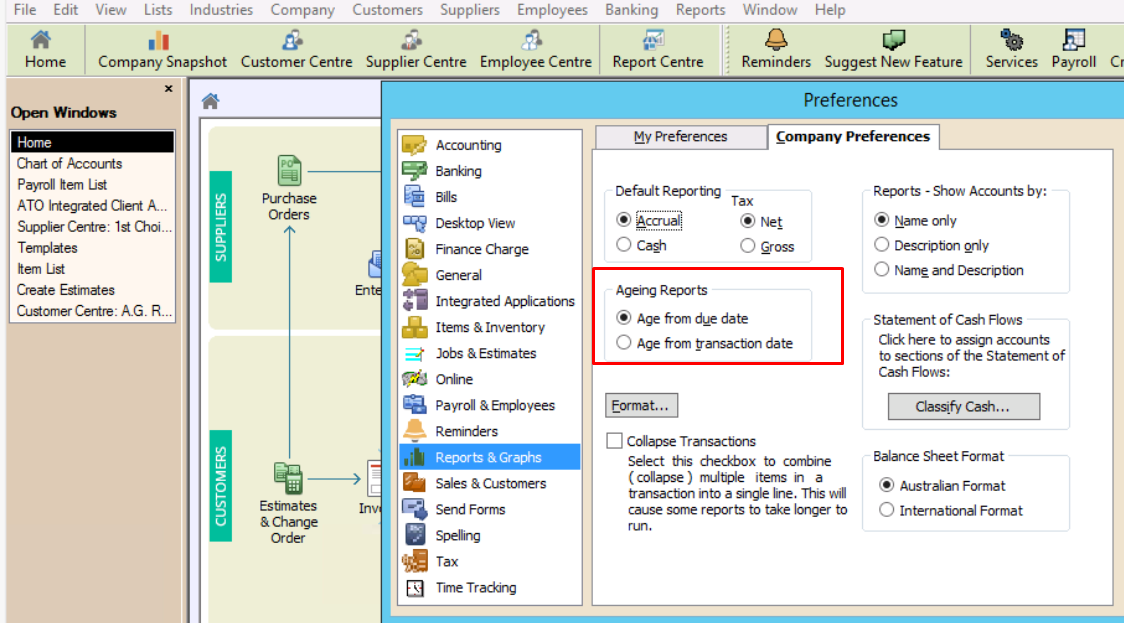
- From the QuickBooks Edit menu, choose Preferences.
- Click Reports & Graphs on the left, and then click the Company Preferences tab.
- If you have selected Age from the due date, a transaction becomes past due after the due date, which is calculated based on the terms assigned to the transaction.
- If you selected Age from the transaction date, the transaction becomes past due after the date on the transaction.
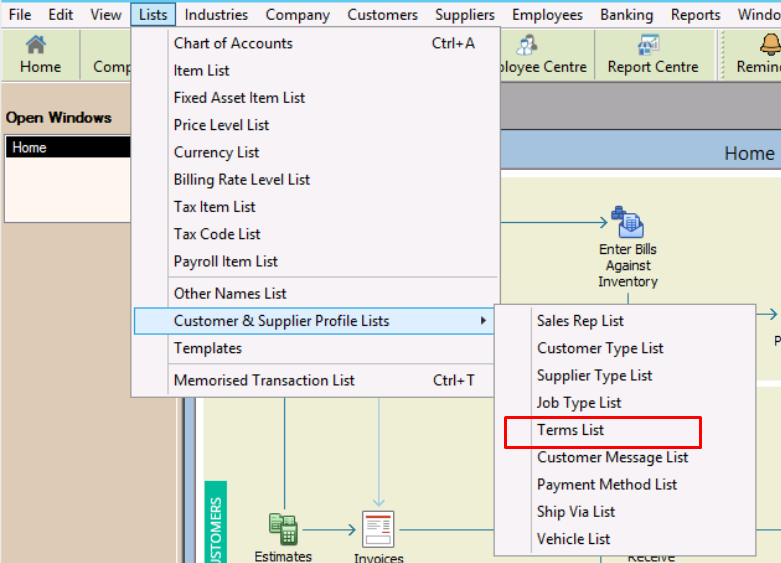
- Check the bill or invoice for the correct term selection. You may have several terms on the Terms List. (To view the Terms List, from the QuickBooks Lists menu, choose Customer & Vendor Profile Lists, and then choose Terms List.)
- Check the term on the transaction for the correct settings. View the Terms List (see section above), and double-click a term to view the settings. For more information on setting up terms:
- From the QuickBooks Help menu, choose Help Index.
- Type terms of payment, click Display and then click Display again.
- For more information on standard vs. date-driven payment terms, click the link in Step 4 of the Help document.
- Check the system date.
- On the taskbar, click the Start button, then choose Settings, and then choose Control Panel.
- Double-click the Date/Time icon. Check that the correct date and year are showing.
- Make any changes if necessary. Click Apply, and then click OK.
Need more help?
Please visit Reckon Community.